There is always something new in skincare.
A new ingredient. A new device. A new product promising to transform your skin.
But while skincare trends constantly change, the fundamental biology of our skin does not.
This is one of the principles behind DMK Skin Revision and one of the reasons I work with DMK Enzyme Therapy in my clinic. Rather than approaching the skin purely from the surface or following whichever ingredient happens to be trending, DMK takes a more individualised approach: understanding how the skin is functioning and creating a treatment programme around what your skin needs.
And this is where Enzyme Therapy becomes particularly interesting.
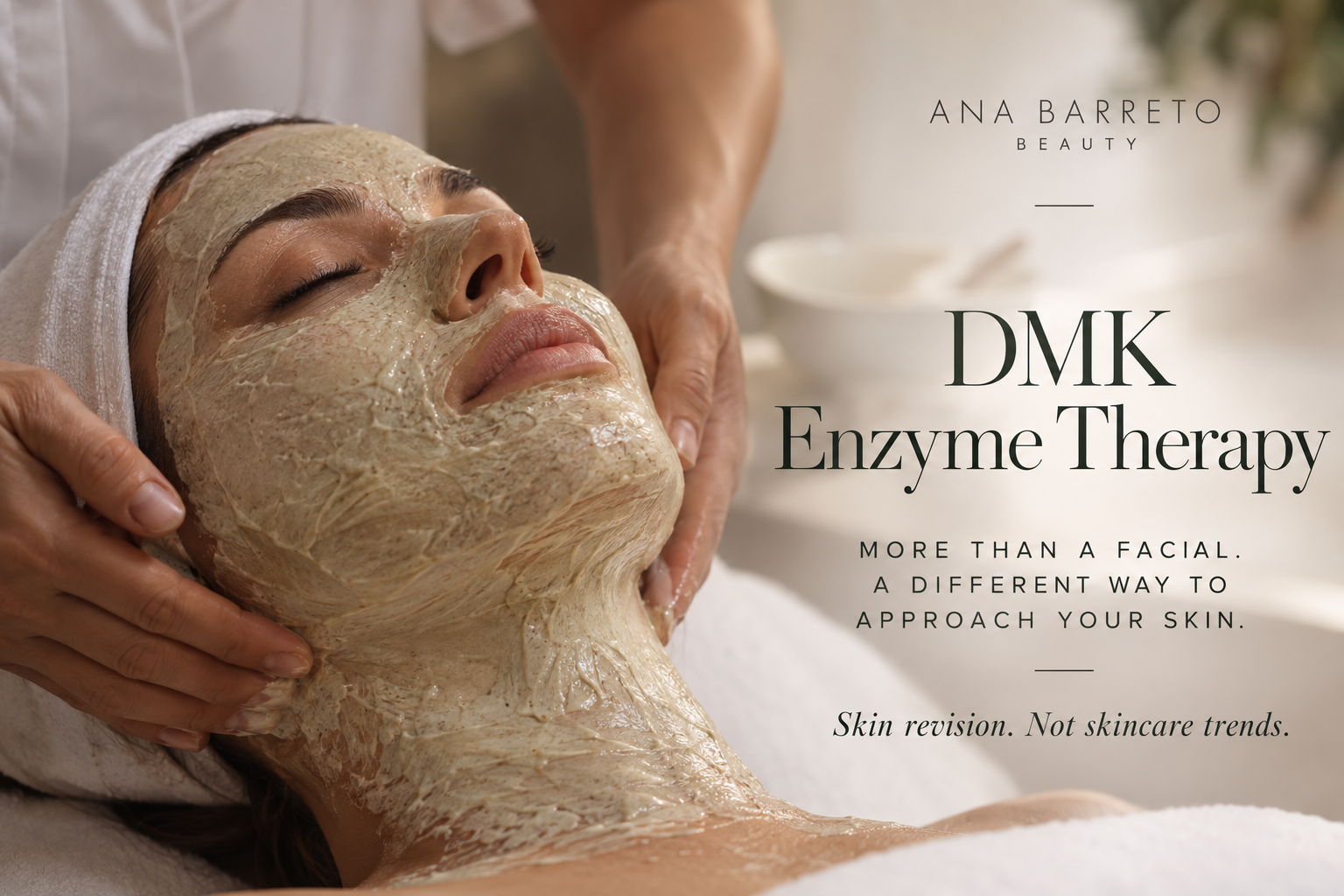
If you've ever seen a photograph of someone wearing the distinctive, tightening DMK Enzyme Masque—or perhaps noticed the temporary network of visible vessels afterwards and wondered what on earth was happening—this guide is for you.
Let's look at what DMK Enzyme Therapy actually is, what happens during a treatment, and why it is very different from having a conventional facial.
What is DMK Enzyme Therapy?
DMK Enzyme Therapy is a professional treatment within the DMK Skin Revision system.
DMK's philosophy is based on working with the skin as a complex, individual system rather than focusing on one fashionable ingredient or treating every client's skin in exactly the same way.
That distinction matters.
A conventional facial may focus primarily on cleansing, exfoliating, hydrating and giving the skin an immediate glow. Those things can certainly have their place.
DMK Enzyme Therapy, however, is approached as part of a wider skin-revision programme.
That means we aren't simply asking:
"What can I put on this skin today?"
We're asking:
"What is this skin showing me, how is it functioning, and what does it need?"
This is why a consultation and professional assessment are such important parts of the process.
How does DMK Enzyme Therapy work?
One of the most recognisable parts of the treatment is the Enzyme Masque.
The masque is professionally prepared and applied to the skin, where it gradually sets and becomes very firm.
And when I say firm, I mean firm.
Clients often describe a tightening or pulsating sensation as the masque sets. It isn't designed to feel like a soft, relaxing hydrating mask—and that surprises people experiencing Enzyme Therapy for the first time.
The masque remains on the skin for a prescribed period before being carefully removed and the rest of the treatment completed.
But Enzyme Therapy isn't simply about applying one masque.
The treatment can form part of a wider personalised DMK protocol incorporating professional treatments, botanical formulations and prescribed home care according to the client's skin and objectives.
That is an important difference between having a DMK treatment and simply buying another skincare product.
What is the DMK "plasmatic effect"?
This is probably the part that generates the most questions.
After Enzyme Therapy, some clients temporarily develop a visible network of tiny red lines across the skin.
If you've seen DMK before-and-after photographs online, you may already recognise it.
This is commonly referred to within DMK as the plasmatic effect.
It can look quite dramatic, but it is temporary. Not every client will display it to the same extent, and its appearance shouldn't be treated as the measure of whether a treatment has "worked".
It's also one of the reasons I believe treatments like this need explanation rather than simply showing a dramatic photograph on Instagram.
Understanding what you're seeing and why you're seeing it is part of understanding your skin.
What are the benefits of DMK Enzyme Therapy?
The precise objective will depend on your skin, because Enzyme Therapy isn't intended to be a one-size-fits-all treatment.
Depending on the individual programme, I may incorporate DMK treatments when working with concerns around:
Dull or tired-looking skin
When skin lacks vitality and simply doesn't look as healthy as it once did, the goal is to improve its overall appearance and function rather than temporarily disguising dullness.
Uneven-looking skin and pigmentation concerns
Pigmentation is complex and can have multiple triggers, so understanding the skin and taking a consistent approach—including appropriate daily UV protection—is particularly important.
Congestion and blemish-prone skin
Rather than automatically reaching for increasingly aggressive products, a professional assessment allows us to look at the condition of the skin as a whole.
Texture and visible signs of ageing
As we age, our skin changes. Instead of trying to make skin look artificially younger, my approach is to support healthy ageing and skin longevity: helping your skin look healthy, resilient and cared for at every stage.
Skin that seems to have stopped responding to products
This is one I see frequently. A bathroom cabinet can be full of expensive products and yet the skin still doesn't feel quite right. More products aren't always the answer.
Sometimes we need to reassess the skin itself.
Is DMK Enzyme Therapy suitable for mature and menopausal skin?
It can form part of a programme for mature or menopausal skin, but this is where personalisation becomes particularly important.
During perimenopause and menopause, hormonal changes can affect hydration, barrier function, elasticity and the overall appearance and behaviour of the skin.
It can suddenly feel as though the routine you've followed for years has stopped working.
That doesn't necessarily mean you need stronger products or more treatments.
You may simply need a different strategy for the skin you have now.
When I work with women through these changes, my aim isn't to "fight" ageing. It is to understand what's happening to the skin and create a realistic programme that supports its health and appearance over time.
DMK Enzyme Therapy may be one element of that programme when appropriate.
Is Enzyme Therapy the same treatment for everyone?
No—and this is perhaps the most important thing to understand about DMK.
Your skin deserves more than a treatment selected from a menu without anyone really looking at it first.
Two women of exactly the same age can have completely different skin.
One may be concerned about pigmentation. Another may be experiencing sensitivity and dryness. Someone else may be dealing with congestion alongside signs of ageing.
Even the same person's skin can behave differently at different stages of life, during menopause, through periods of stress, or as seasons and lifestyles change.
This is why I don't believe in simply prescribing the treatment that happens to be popular on Instagram.
The treatment should follow the skin—not the trend.
What happens at a DMK appointment?
Your treatment begins with understanding your skin and what you would like to improve.
We'll consider your current concerns, skincare routine and relevant history before deciding which treatment approach is appropriate.
Depending on your skin, the appointment may involve preparatory steps before the Enzyme Masque is applied.
Once applied, the masque progressively hardens. You'll be resting while it works, although you'll remain aware of the characteristic tightening sensation.
Afterwards, the masque is removed and appropriate finishing products are applied.
Your therapist may also recommend prescriptive products to complement the professional treatment.
This is significant because what you do between appointments matters.
A monthly treatment cannot compensate for an unsuitable routine every other day of the month.
Consistency is where much of good skincare happens.
Will I see a difference after one treatment?
Your skin may look and feel different following a treatment, but I don't want clients to think about skin revision as a one-appointment transformation.
Skin concerns often develop over months or years.
Meaningful improvement can therefore require a series of treatments combined with appropriate prescriptive home rotine, daily sun protection and consistency.
The appropriate frequency and number of sessions will vary considerably from person to person.
That's why I prefer to create a plan rather than promise an arbitrary number of treatments before I've assessed someone's skin.
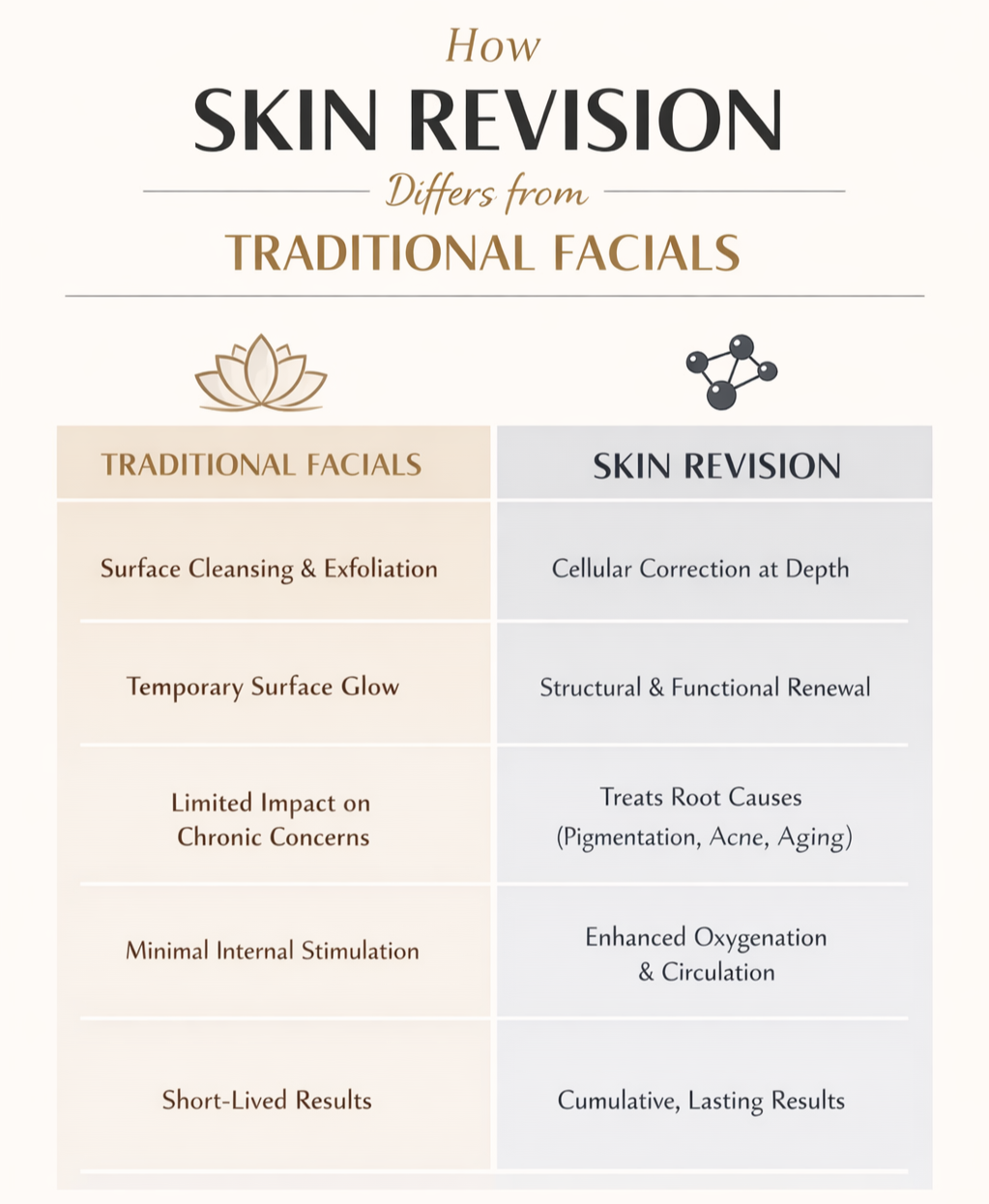
DMK Enzyme Therapy vs a traditional facial
Perhaps the easiest way to understand the difference is this:
A traditional facial can be a wonderful way to cleanse, hydrate, pamper and refresh your skin.
DMK Enzyme Therapy is approached differently.
It belongs to a broader skin-revision philosophy that considers how the skin is functioning, the concerns we're trying to address and what needs to happen between professional treatments as well as during them.
Neither approach needs to replace the other.
It simply depends on what you want from your appointment.
If your priority is relaxation, you may want a relaxing facial.
If you're coming to me saying, "Ana, I've tried everything and I don't understand what my skin needs anymore," then we need to start with the skin—not with a trend.
Your Skin Doesn't Follow Trends
One of my favourite ideas behind the DMK philosophy is beautifully simple:
Trending ingredients change. Skin biology doesn't.
It's very easy to become distracted by skincare marketing.
One month everyone needs one ingredient. The next month we're told we need something completely different.
But good skin care isn't about owning everything.
It's about understanding your skin, choosing appropriate treatments and products, protecting it from avoidable damage and being consistent enough to allow a thoughtful programme to work.
DMK Enzyme Therapy fits naturally into that philosophy.
It isn't about chasing perfection or promising overnight transformation.
It's about taking your skin seriously.
Curious whether DMK Enzyme Therapy is right for you?
If your skin has changed, your current routine no longer seems to be working, or you're simply unsure what your skin actually needs, book a skin consultation with Ana.
We'll look at your skin together and decide what makes sense for you—whether that includes DMK Enzyme Therapy or another approach.